
How heating and poor ventilation create invisible moisture that fuels winter mold growth
2025/12/29
目次
What Are the Hidden Moisture Traps in Winter Homes?
1.1. How Heating and Temperature Differences Cause Condensation
1.2. The Humidity Build-Up That Happens After Turning Off the AC
1. What Are the Hidden Moisture Traps in Winter Homes?
1.1. How Heating and Temperature Differences Cause Condensation
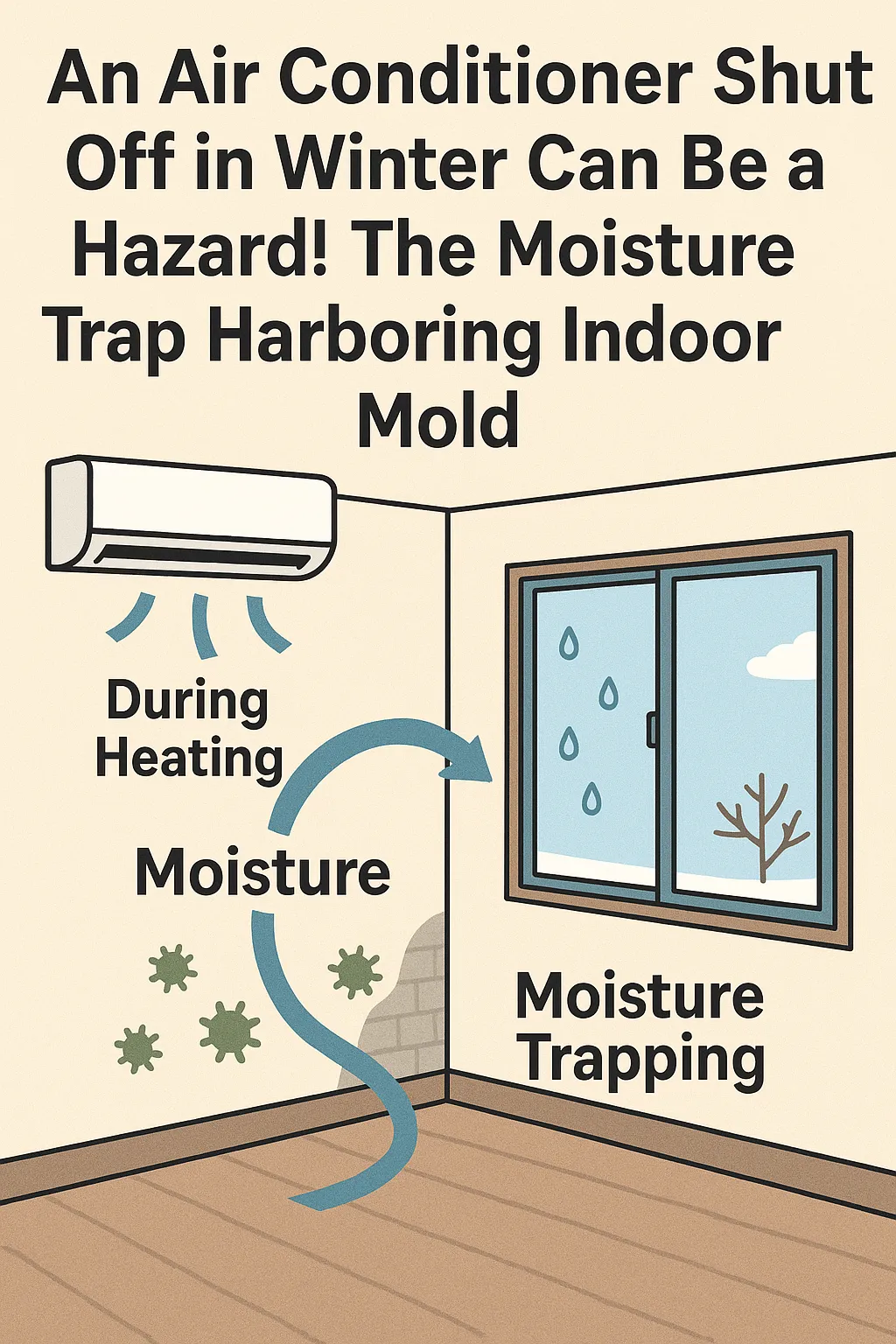
Most winter mold issues begin with temperature difference condensation.
When warm indoor air from heating touches cold surfaces such as windows or exterior walls, the moisture in the air cools down and turns into water droplets — condensation.
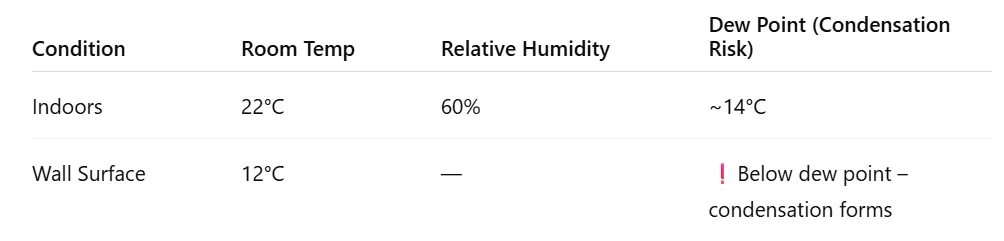
Once a wall or window surface drops below the dew point (around 14°C in this case), moisture starts forming on it. This trapped moisture becomes the perfect nutrient source for mold spores to grow. North-facing walls and window edges are particularly vulnerable.
1.2. The Humidity Build-Up That Happens After Turning Off the AC
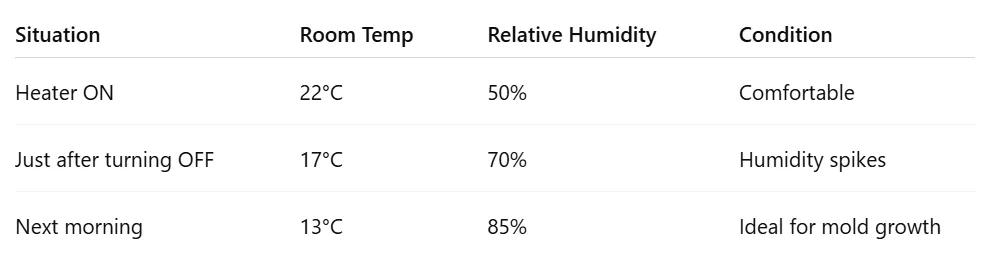
After turning off your heater or air conditioner, the temperature inside drops quickly, but the moisture content remains unchanged.
This sudden cooling raises relative humidity, causing condensation to form again — often in hidden places such as behind furniture or inside wall cavities.
🧠 Key Insight:
The period right after heating stops is when mold risk peaks.
At night, stagnant air and closed windows trap moisture, creating what experts call “hidden condensation zones” inside your home.
The Science Behind Mold Growth During Winter
2.1. Understanding Relative Humidity and Dew Point
2.2. Why Poor Ventilation in Winter Fuels Mold Growth
2. The Science Behind Mold Growth During Winter
2.1. Understanding Relative Humidity and Dew Point
Even if your humidity meter shows “50%,” it can still be dangerous in winter.
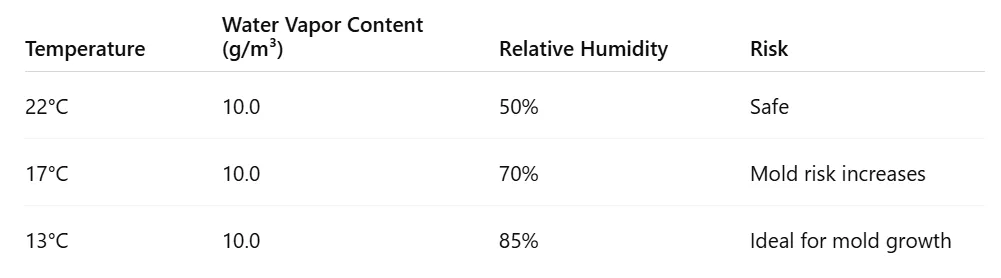
Relative humidity depends on temperature: when air cools, humidity rises — even with the same moisture content.
In short, “cooler air feels wetter.”
🧩 Scientific Explanation:
As temperature drops, the air can hold less moisture, bringing it closer to the dew point. When cold surfaces meet moist air, condensation occurs — creating the perfect microclimate for mold growth even in winter.
2.2. Why Poor Ventilation in Winter Fuels Mold Growth
During cold months, people keep windows shut longer, drastically reducing natural ventilation.
This traps carbon dioxide and water vapor indoors, raising humidity and feeding microbial growth.
In modern airtight homes, moisture has nowhere to escape, causing localized mold outbreaks — often behind wardrobes, in closets, or on north-facing walls.
Practical Ways to Prevent Winter Mold
3.1. Balancing Heating and Ventilation to Control Humidity
3.2. Using Dehumidifiers and Anti-Condensation Tools Effectively
3. Practical Ways to Prevent Winter Mold
3.1. Balancing Heating and Ventilation to Control Humidity
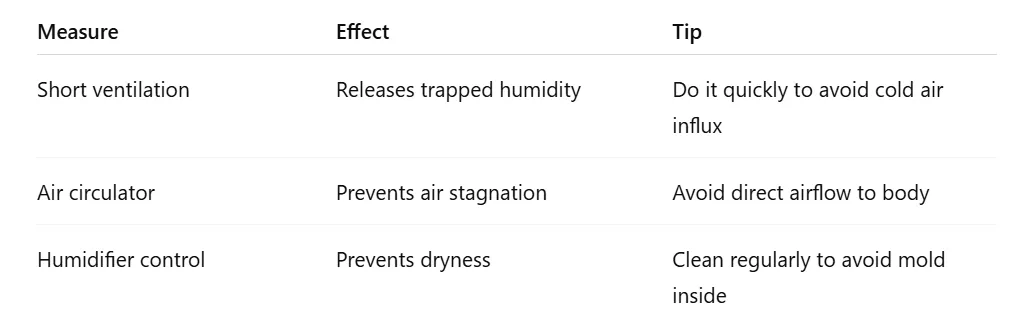
Open windows for 5–10 minutes once per hour for a short, effective air exchange
Use a circulation fan or air circulator to distribute warm air evenly
When using a humidifier, keep humidity below 60%
Install thermal curtains or double-glazed windows to prevent cold surface condensation
3.2. Using Dehumidifiers and Anti-Condensation Tools Effectively
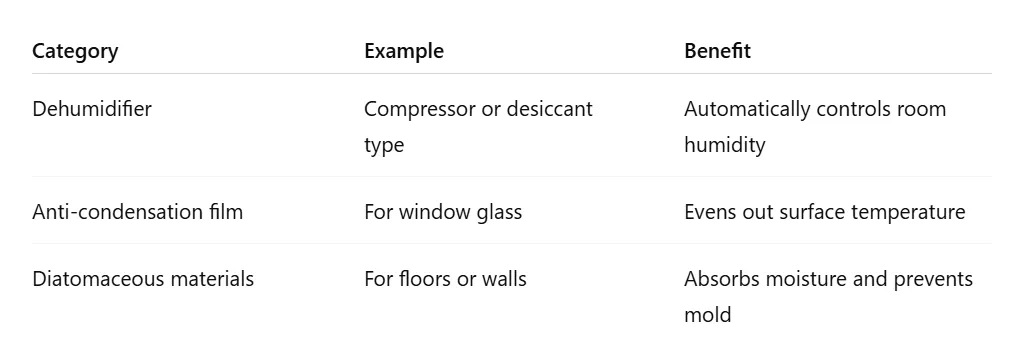
Using smart tools can help maintain a stable indoor humidity level throughout winter.
🧰 Recommended Tools
Even in winter, indoor mold never sleeps.
Understanding how temperature, humidity, and airflow interact will help you eliminate these hidden traps and create a healthy, comfortable indoor environment.
----------------------------------------------------------------------
カビバスターズ沖縄
沖縄県国頭郡金武町伊芸1996-13
電話番号 : 080-3977-9591
----------------------------------------------------------------------