
Invisible Humidity Management for Quality Homes — Mold Prevention Begins at the Design Stage
2025/11/09

1. Structural Causes of Closet Mold Growth
Closet mold rarely results from occupants’ lifestyle habits alone. More often, it originates in design or construction deficiencies that allow moisture and temperature imbalances. In airtight, well-insulated modern homes, even minor thermal bridges or ventilation gaps can create localized condensation that fosters mold growth.
1.1. The Relationship Between Insulation, Airtightness, and Condensation
While improved insulation and airtightness enhance energy efficiency, they also trap indoor humidity. Closets—particularly those located along exterior walls—are vulnerable to interstitial condensation caused by temperature differences between interior air and wall surfaces.
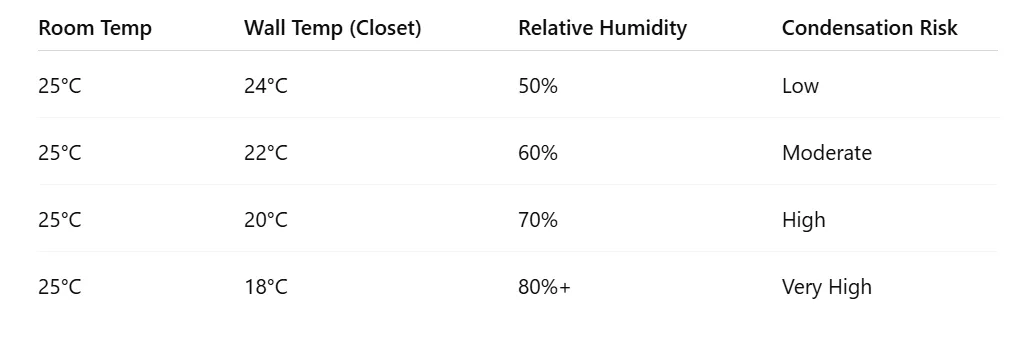
When closet wall surfaces drop below 20°C while humidity exceeds 70%, condensation forms, providing ideal conditions for mold propagation (20–30°C, RH 70%+).
Discontinuities in insulation or leaky joints amplify this risk, making airtight detailing and thermal-bridge prevention essential. Walk-in closets adjacent to bedrooms are especially prone since airflow is minimal—creating a “sealed, stagnant microclimate” perfect for mold.
1.2. Ventilation Design and Moisture Trapping
A second structural factor is poor ventilation design. If air movement between closets and living spaces is obstructed, humidity becomes trapped. Builders often calculate ventilation rates for entire rooms but exclude closets as separate zones.
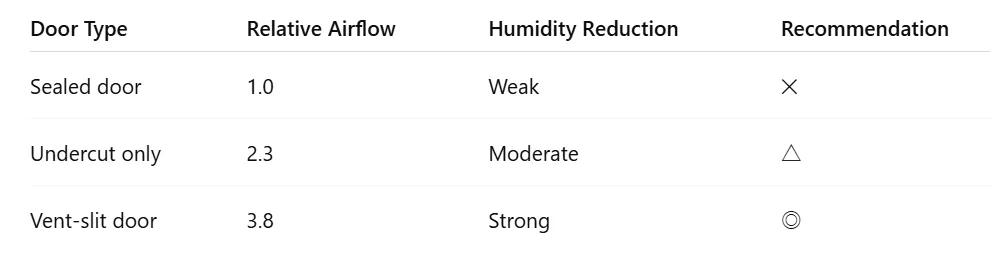
Simple design tweaks—like vented doors or lower door gaps—dramatically improve airflow.
However, when airtight folding or sliding doors are used, air stagnation occurs. Combined with imbalanced mechanical ventilation (e.g., exhaust vents centered in living areas only), dead-air zones form near walls and closets.
Closets deeper than 900 mm are particularly problematic, as minimal air movement allows condensation to accumulate behind wall linings. Moisture can penetrate gypsum board or plywood, encouraging hidden fungal growth invisible to occupants.
Even minor construction lapses—like compressed insulation or missing vapor seals—allow moist air to infiltrate cavities. Over months, this micro-condensation feeds mold colonies that later emerge as visible stains or odors.
Ultimately, these are structural moisture dynamics, not occupant behavior. Left unaddressed, they manifest as warranty claims or disputes one to two years post-handover.
2. Design and Construction Practices for Mold Prevention
To prevent closet mold, moisture control must be integrated from the design stage. After completion, dehumidifiers or chemical absorbers can only treat symptoms, not causes. Builders should focus on insulation continuity, moisture barriers, and effective airflow.
2.1. Controlling Wall-Cavity Condensation
High-precision insulation work is critical. Even small gaps can create condensation nuclei. Builders should check:
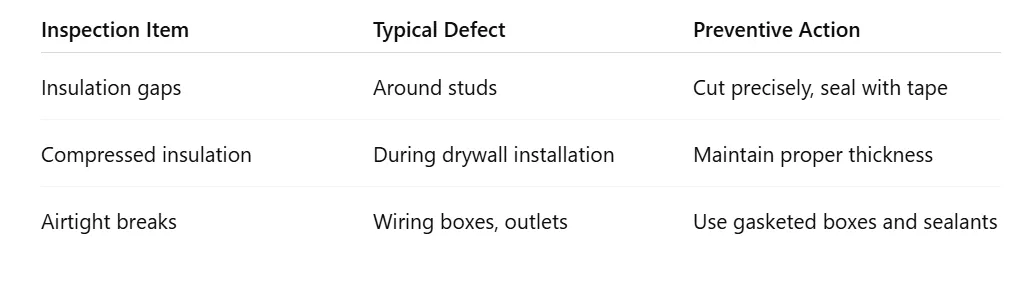
Infrared thermography or in-wall humidity loggers help verify insulation quality and detect thermal anomalies before closing walls.
A balanced vapor-control + ventilation layer is also vital—vapor barriers inside, ventilation cavities outside—ensuring moisture moves outward in one direction.
2.2. Ventilation and Door Design
Even with perfect insulation, stagnant air breeds mold.
Effective designs include:
5–10 mm undercuts at door bottoms
Vent slits or louvered panels at the top
Optional small exhaust ducts in walk-in closets
Finishing materials also matter. Choose moisture-regulating surfaces like diatomaceous earth wallpaper or breathable coatings instead of vinyl. For flooring, use mold-resistant plywood or engineered wood that tolerates humidity swings.
Together, these design tweaks reduce the likelihood of post-handover mold complaints and reinforce builder reputation for quality control.
3. Practical Measures to Avoid Post-Construction Complaints
Even with proper design, residual moisture from construction can lead to mold if environmental control is neglected. Builders can minimize this risk through monitoring, inspection, and scientific remediation.
3.1. Early Detection and Third-Party Testing
Installing small temperature-humidity data loggers inside closets during the first year after handover provides valuable metrics.
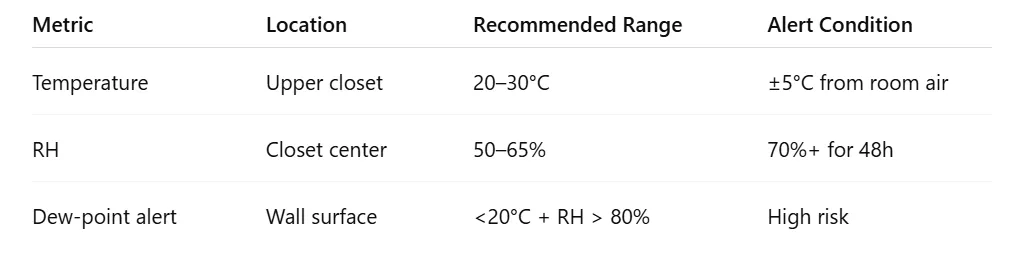
Objective data supports warranty discussions and verifies construction quality.
For further credibility, builders can partner with third-party microbial testing bodies such as the Japan Microbial Countermeasure Association, which quantifies airborne mold spores (CFU/m³).
Reports from these inspections can be included in completion documents as proof of hygiene and quality.
3.2. Long-Term Prevention with the MIST® Method
When mold does occur, superficial bleaching is ineffective. The MIST® Method—used by Mold Busters Okinawa—atomizes a proprietary biocide into ultra-fine particles that penetrate and decompose mold roots (hyphae) within materials.
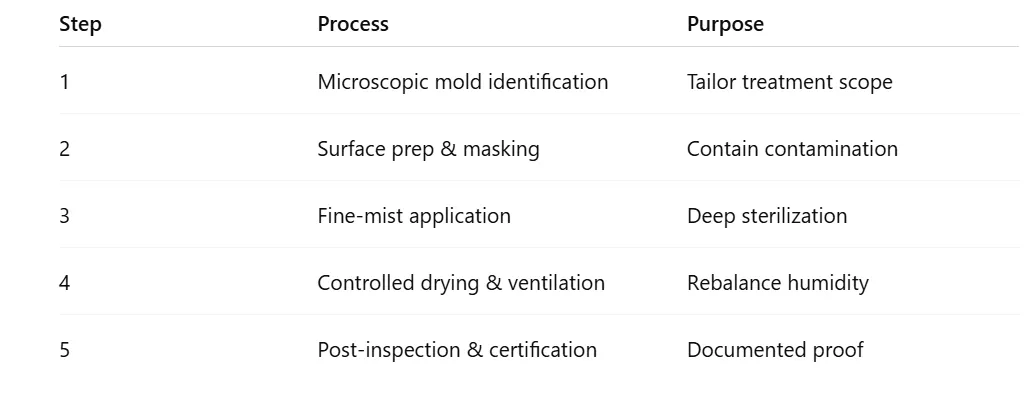
Because it targets internal fungal structures without damaging materials, this method ensures complete removal and long-term prevention—enhancing homeowner satisfaction and brand trust.
Conclusion: Turning Mold Prevention into a Quality Standard
Closet mold is not a user error; it’s an indicator of moisture imbalance in design and construction.
Builders can eliminate it by adopting a three-phase strategy:
Design stage: control condensation through balanced insulation and vapor flow
Construction stage: ensure airtightness, ventilation, and inspection precision
Post-handover: monitor, document, and respond scientifically with proven methods like MIST®
When builders treat mold control as part of quality branding rather than warranty maintenance, they elevate both customer trust and long-term housing value.
----------------------------------------------------------------------
カビバスターズ沖縄
沖縄県国頭郡金武町伊芸1996-13
電話番号 : 080-3977-9591
----------------------------------------------------------------------