Smart Storage and Everyday Moisture Control for a Healthier Home
2025/11/07
1. Understand Why Mold Grows Inside Closets
1.1 How Moisture and Poor Airflow Create a Mold Hotspot
Closets are naturally enclosed spaces where air circulation is minimal. When packed with clothes, bags, and linens that trap humidity, the moisture level quickly rises, creating the perfect breeding ground for mold.
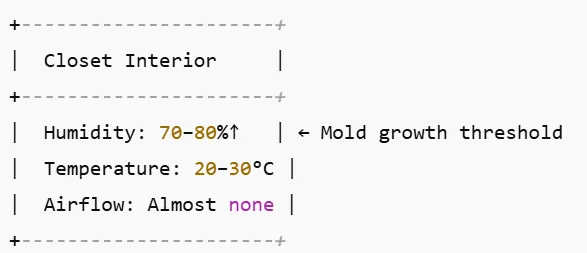
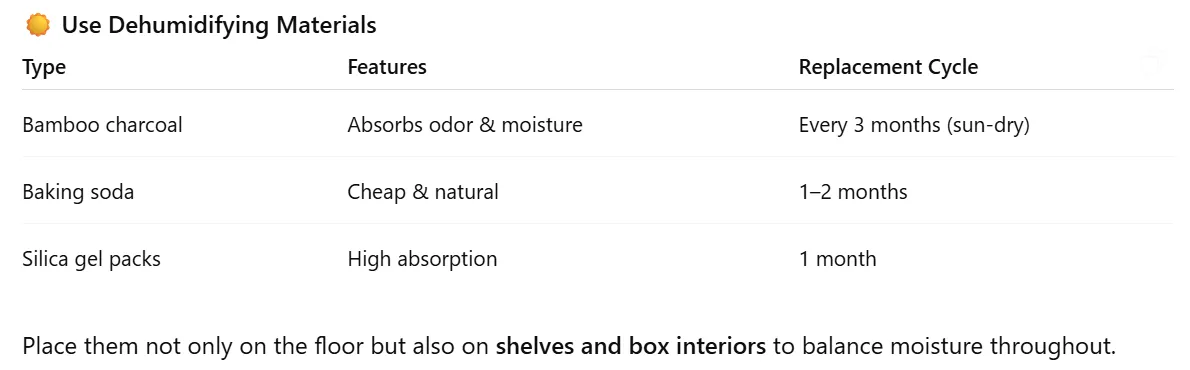
Once humidity exceeds 70%, mold spores become active.
In Okinawa’s climate, for instance, humidity can easily reach 80–90% indoors during the rainy season — even if the room feels cool under air conditioning, the closet becomes a moisture trap.
🧥 Why Clothes and Storage Items Trap Moisture
Natural fibers like cotton, linen, and wool absorb water vapor from the air. Common habits such as:
storing clothes before they fully dry,
hanging damp coats after a rainy day,
or overpacking with boxes and dehumidifiers blocking airflow,
all increase the risk of internal humidity and mildew formation.
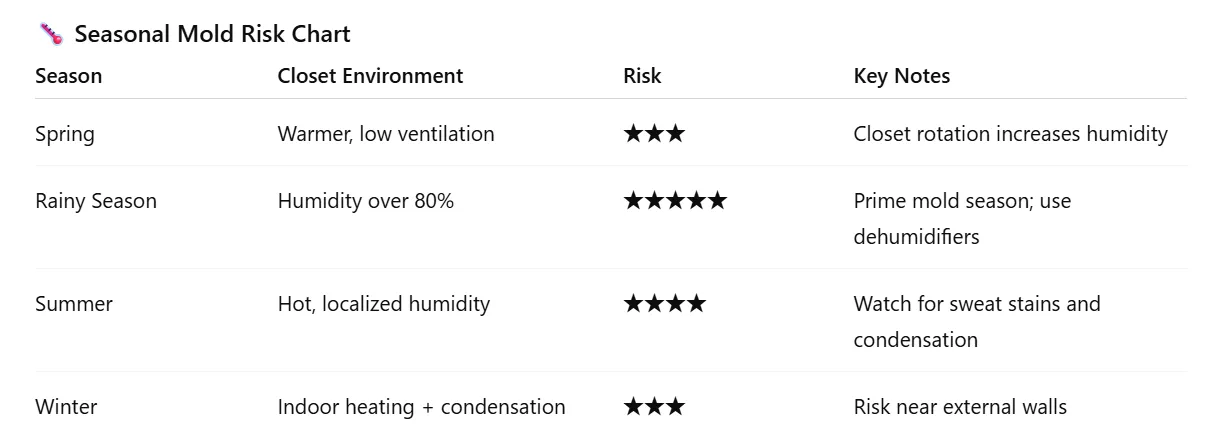
Mold thrives all year but peaks when warmth and moisture combine. Proper ventilation and seasonal awareness are essential.
2. Simple, Everyday Closet Mold Prevention Tips
2.1 How to Store and Dehumidify Effectively
The two golden rules of closet care are “reduce humidity” and “keep air moving.”
Here’s how to apply both with minimal effort.
👕 Don’t Overpack Your Closet
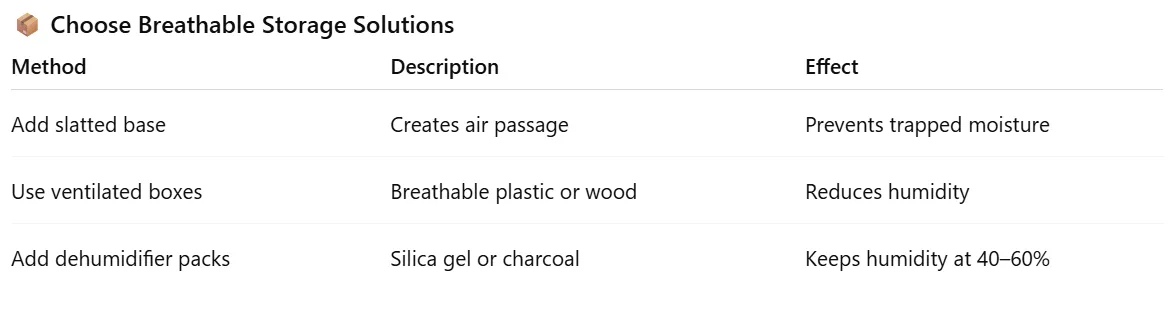
Aim for no more than 70% storage capacity. This spacing helps airflow and keeps humidity from concentrating.
Leave 3–5 cm gaps between hanging clothes
Rotate clothes seasonally
Place a slatted wooden board (sunoko) under boxes for ventilation
🌬️ Air Out the Closet Weekly
Open closet doors for 10–15 minutes once or twice a week.
Use a fan or AC dry mode to circulate air.
👉 Avoid ventilation when outdoor humidity is high — especially in Okinawa’s rainy months.
🪞 Leave Gaps Between Walls and Furniture
Keep a 5 cm gap between the wall and closet unit.
This prevents trapped air pockets and condensation that lead to hidden mold.
🌀 Illustration: Ideal Closet Storage and Airflow
(An accompanying diagram shows clothes spaced evenly, airflow arrows in red, dehumidifiers and charcoal placed below — representing a well-ventilated, moisture-controlled closet.)
3. Safe Mold Removal and When to Call Professionals
3.1 DIY Cleaning vs. Professional Help
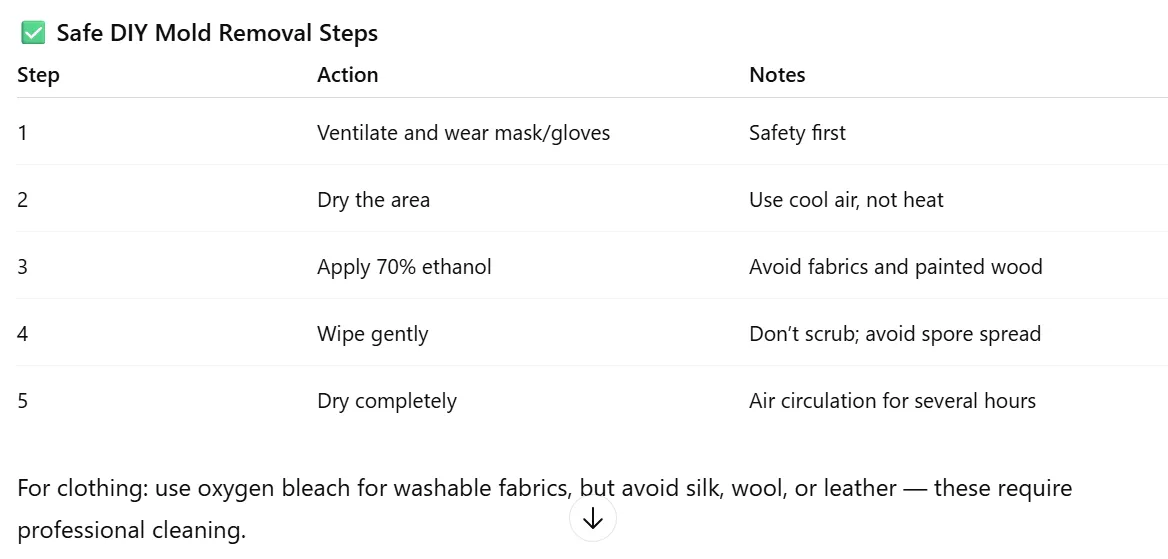
If mold has already appeared, don’t panic — but act wisely.
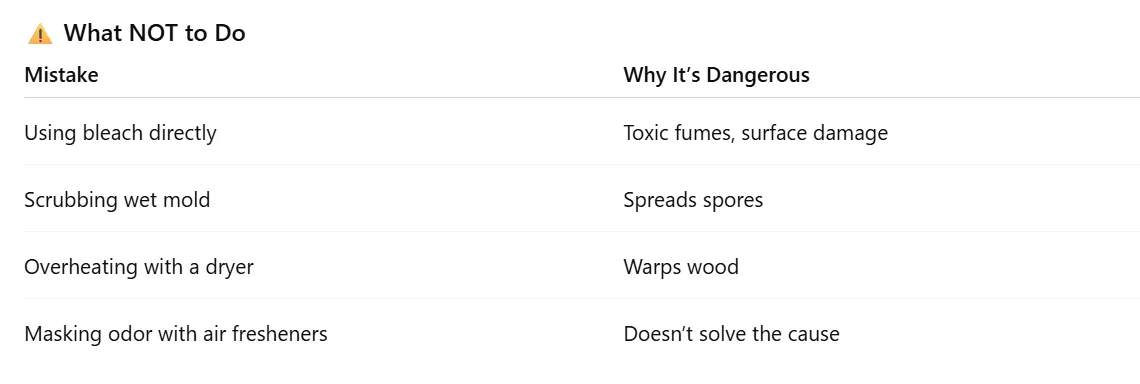
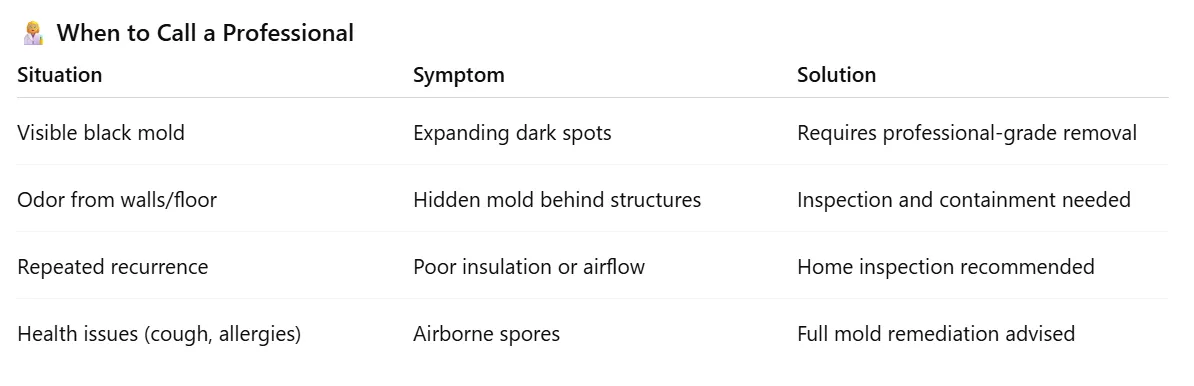
DIY removal works only for small, light-colored patches.
For black mold, musty odor, or spreading spots, contact a professional service like Mold Busters Okinawa.
🧠 Illustration: Mold Severity and Response Levels
A diagram shows three zones:
Green = light mold → DIY
Yellow = moderate → monitor closely
Red = black mold → professional cleaning required
Conclusion
Mold inside closets often starts invisibly, but once detected, prompt and correct action makes all the difference.
By maintaining ventilation, using dehumidifiers wisely, and knowing when to seek expert help, homeowners can ensure their storage spaces — and their health — stay safe from mold year-round.
For residents in Okinawa or other humid regions, Mold Busters Okinawa offers certified inspection and safe MIST® method remediation for long-lasting protection.
----------------------------------------------------------------------
カビバスターズ沖縄
沖縄県国頭郡金武町伊芸1996-13
電話番号 : 080-3977-9591
----------------------------------------------------------------------