
Older Homes: Ventilation and Mold
2026/10/07
A musty room in an older Okinawa home needs a moisture investigation, not an automatic recommendation to install more fans. Ventilation, dehumidification, leak repair and mold removal do different jobs. The useful starting point is to record where the problem appears, when surfaces become wet and how the rooms are used. That information helps a building or equipment professional decide what needs checking.
This guide is for residents, property owners and managers who want a practical way to discuss recurring mold in an older home. It does not diagnose a particular building from its age or appearance. An older house can have several generations of windows, extensions and air-conditioning equipment, so assumptions about the original layout may be wrong.
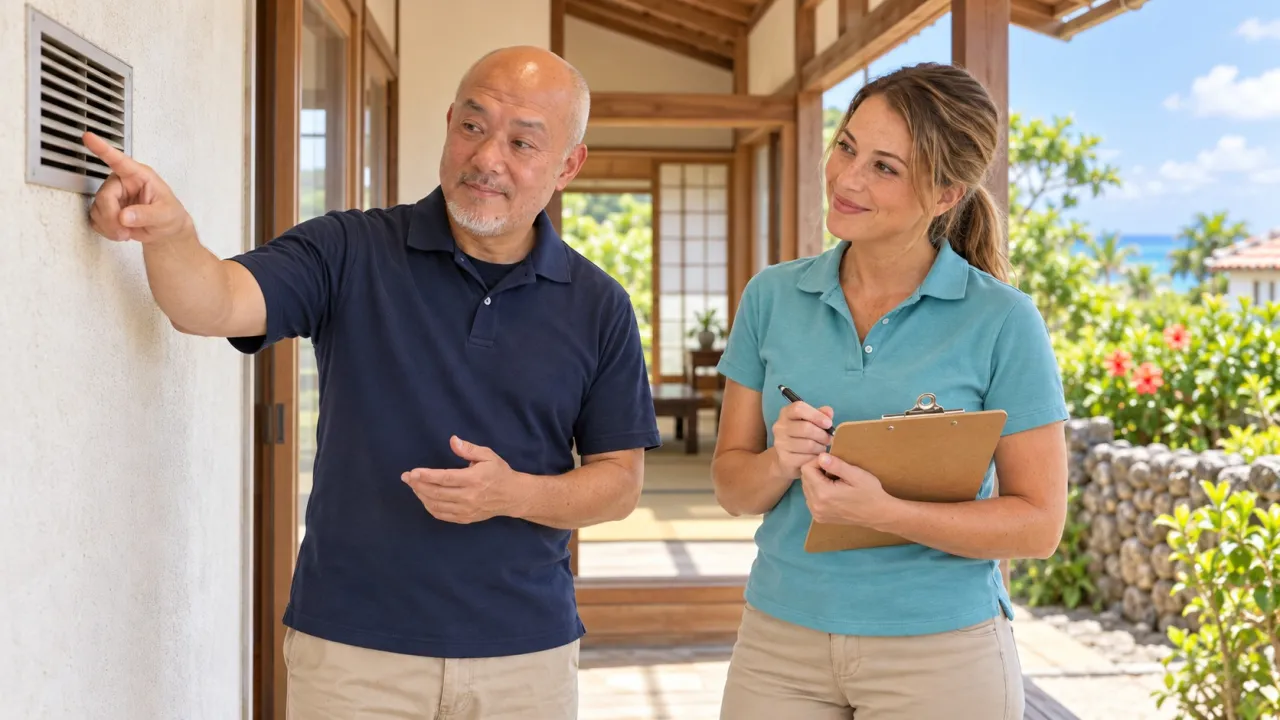
1. Map the problem before blaming ventilation
Start with observable information
Write down the room, affected surface and date when you first noticed the issue. A wide photograph should show the wall, window and nearby furniture; a close photograph should show the stain or change. Do not put your face close to a surface to investigate a smell. A musty odor is information to report, but it cannot identify a mold species or establish the full extent of damage.
Keep descriptions separate from conclusions. “The bottom of this wall becomes wet after heavy rain” is more useful than “the ventilation is defective” when nobody has inspected the system. Include past roof repairs, plumbing work, new windows or a recent change in room use. If the problem existed before you moved in, say what you know and what remains unknown.
Older properties sometimes have missing plans. You can still provide a simple room sketch showing windows, doors, bathrooms and the affected area. It is not a substitute for a survey, but it helps the first conversation. Do not open wall cavities or enter a confined crawl space simply to improve the sketch.
2. Check how the existing system is intended to work
Existing-equipment check
Find the model information for fans and ventilation equipment where it is safely accessible. Ask the owner or maintenance contractor what each device serves and whether any parts of the system have been altered. A fan that makes a noise may still need inspection; noise alone does not demonstrate that the intended airflow is present.
Check user-maintenance items only as described in the instruction manual. That may include a removable filter or a grille that can be cleaned from a safe position. Do not remove wiring, reach into a running fan or climb onto an unstable object. Where a component is too high or difficult to access, arrange appropriate maintenance instead.
Furniture or stored items may block access to an inlet or grille. Record that condition and discuss a safe layout with the owner. Do not cut a new vent into a wall or close an existing opening without advice. The building’s air path, weather protection and other equipment need to be considered together.
3. Record temperature and humidity together
A useful room log
Use a room thermometer and hygrometer to record changes rather than relying on one reading. Compare rooms at similar times and in reasonably similar positions. A device placed in direct sunlight or directly in an air-conditioning stream may not represent the room conditions you want to describe. Follow the measuring device’s instructions and note where it was placed.
Add whether windows were open, cooling or dehumidification was operating, and whether laundry was drying indoors. You do not need to change your entire routine to make a record. The aim is to show the normal pattern and the times when the problem returns. Include wet surfaces even when the room’s central reading appears unremarkable.
Opening windows is not an unconditional drying method. Compare indoor and outdoor conditions with an equipment professional when you are unsure. Relative humidity percentages at different temperatures are not a direct comparison of the amount of water in the air. Ventilation and moisture removal should be coordinated, while required ventilation must remain properly managed.
4. Separate leaks, condensation and everyday moisture
Questions for the investigation
If an area changes after rain, report the timing, location and any previous repairs. If it becomes wet during cooling, report the equipment settings and which surface changes. If plumbing is nearby, include when the fixtures are used. These observations guide a survey; they do not prove a particular cause by themselves.
A visible stain may remain after an old leak, while a fresh wet patch may indicate an ongoing problem. Ask the investigator to distinguish the current condition from historical marks. Where moisture measurements are proposed, ask which locations will be checked and how the results will be interpreted for the materials involved.
Avoid painting over the evidence before the cause has been discussed. Keep dated photographs and repair records. Where water is near electrical equipment, leave the area alone and seek appropriate electrical advice. Dehumidification is not a repair for a leaking pipe or a rainwater entry path.
5. Compare proposed work by purpose and scope
Compare like with like
Before accepting a proposal for a new fan, ask what evidence supports it and how improvement will be assessed. The discussion should cover the building layout, existing equipment, intended operation and maintenance. Additional equipment is one possible response; it should not be the starting assumption for every older house.
For mold-removal work, ask about affected materials, access, protection of furnishings and the area that will actually be treated. A wall-covering replacement, a leak repair and surface cleaning are different tasks. If several contractors are involved, identify who coordinates the order of work and who checks the condition before surfaces are closed again.
Quotes are easier to compare when the same scope is written down. Check whether investigation, reports, transport, replacement materials and follow-up visits are included. For properties on Miyako or Ishigaki and other islands, confirm travel costs and access arrangements before booking. Do not assume that a mainland quote includes island travel.
6. Plan around occupants and property management
Before work starts
For a rental, report recurring moisture and mold to the owner or management company before altering building surfaces. Keep a dated message and photographs. Ask which routine cleaning you may perform and which inspection or repair the manager will arrange. Avoid deciding responsibility for costs from the appearance of the problem alone.
Tell the contractor about children, pets and anyone with health concerns, without sharing unnecessary medical details. Seek medical advice about symptoms or individual exposure concerns. A building service can explain its work and site conditions, but it cannot diagnose illness or promise that remediation will cure symptoms.
For a vacant or intermittently occupied home, decide who checks equipment, drainage and the affected area between visits. Unattended operation must comply with the equipment’s instructions and suitable supervision arrangements. Record what happens after power interruptions and who is responsible for maintenance. A plan that depends on daily checks needs a named person who can actually carry them out.
7. Check the outcome against the original problem
Follow-up questions
Keep before-and-after photographs from comparable positions. Ask for the repaired or treated locations, the date of work and any limitations in writing. If only accessible surfaces were inspected, do not describe hidden areas as confirmed dry or clean. Record outstanding repairs separately from completed cleaning.
Watch for the original symptoms: the same wet patch, a returning stain or a recurring odor. Agree a follow-up method with the contractor rather than repeatedly opening surfaces yourself. If rain or cooling previously triggered the problem, report what happens under those conditions after the work. Improvement should be assessed against the issue you first documented.
Does an old home always need new ventilation equipment?
No. Age alone does not establish the cause of moisture or the necessary work. Start with the building condition, equipment and observations.
Will a fan remove mold already on a wall?
Air movement and removal are different tasks. Do not direct airflow at a moldy surface as a cleaning method. Discuss the material and appropriate treatment.
Can a mold test certify that the whole house is safe?
A test has a specific sampling location and purpose. Ask what it can establish and what remains outside its scope. Health questions also need appropriate medical advice.
For recurring mold, unclear moisture sources or musty rooms in an older Okinawa home, contact Kabibusters Okinawa with the municipality, building use, photographs and a short history. We can discuss what needs checking and how the proposed work and costs will be explained. Site access, island travel and any investigation or report fees are confirmed in advance; response times and outcomes depend on the circumstances.
Send photographs through LINE / Contact form / Service information / Pricing information
Further reading: EPA guidance on household moisture and mold and CDC/NIOSH guidance on testing and remediation.
沖縄のカビ除去・調査のご相談
カビバスターズ沖縄(沖縄・稼大エンジニアリング株式会社)
沖縄県国頭郡金武町字伊芸1996-13
電話:080-3977-9591
受付時間:10:00〜18:00(土・日休み)
カビの写真、市町村名、建物の種類、発生場所・広さ、再発や漏水の有無をお知らせください。対応方法や現地確認の必要性を相談できます。費用は作業範囲・検査・報告書・出張条件などを確認してご案内します。
LINEで写真相談 | メールでお問い合わせ | 料金の目安 | 沖縄の施工事例
那覇市のカビ取りの対応・相談案内
宮古島のカビ取りの対応・相談案内
石垣島のカビ取りの対応・相談案内
カビ対策の対応・相談案内
除カビの対応・相談案内
----------------------------------------------------------------------


