Underground mold enquiries
2026/11/09
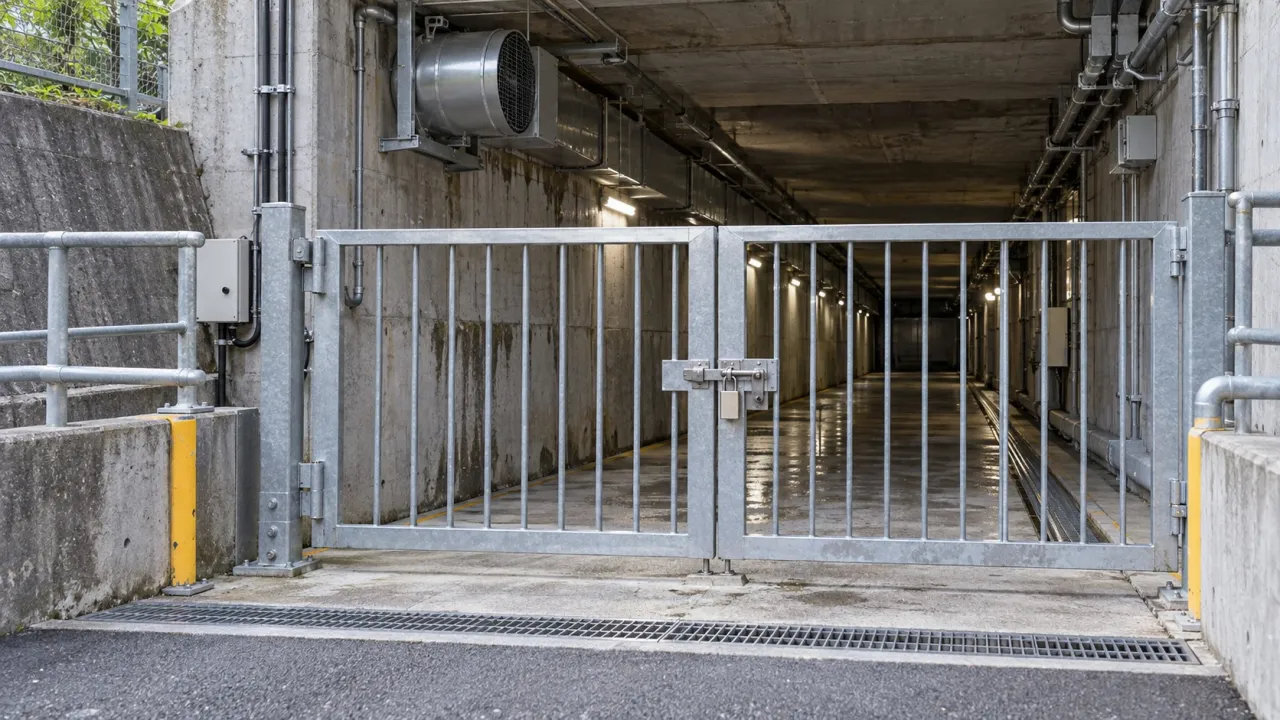
A damp patch or suspected mold in a tunnel, utility corridor or underground room needs a facility management response. It is not an invitation for an occupant to enter, collect a sample or start cleaning. Underground spaces can involve access restrictions and hazards that a photograph cannot reveal. The responsible facility team should decide who may enter and which assessments are required before a mold inspection is arranged.
This guide helps owners and managers prepare a clear inspection brief. It does not provide a confined space entry procedure, a ventilation calculation, a worker exposure limit or a cleaning recipe. The building question is where moisture or visible growth has been reported, what remains unknown and which authorized specialists need to coordinate. Images are AI educational illustrations, not records of a real facility or completed project.
A 60-second guide to this article
60 seconds, silent, with English captions. AI educational illustration, not an actual customer or inspection record.
目次
Observation and authorized access
Observe
Use a safe permitted position
Report
Describe facts and unknowns
Access
Responsible facility manager
1. Report the observation without entering the space
Use information already available from a safe, permitted position. Identify the facility, access point, level and nearest marked location. Describe what was actually observed: discoloration on concrete, standing water reported by an authorized worker, condensation on a surface or a recurring odor. Keep these observations separate from assumptions about mold species, the source of water or the condition of inaccessible areas. A photograph alone does not establish the full extent of a problem.
Send the report through the facility's established management route. A visitor, tenant or general maintenance contractor should not unlock a restricted entrance, cross a barrier or follow someone inside simply to obtain better photographs. If an immediate operational or safety concern exists, follow the site's emergency arrangements. Do not delay that response while preparing a mold enquiry. Mark any area that has not been inspected as unknown, rather than describing it as clear.
2. Ask the responsible manager to define access requirements
The facility manager should identify the team responsible for access, worker safety, utilities and operational control. Whether a particular location requires special entry arrangements is a decision for competent personnel under applicable local rules and the site's procedures. Do not infer that a space is safe because the door is open, a fan is running or another worker recently entered. A mold contractor's visit does not replace the facility's access controls.
For the enquiry, record who can authorize a visit, who must attend and which documents or assessments the visiting team needs to review. Ask whether work can be observed from an accessible area before any entry is considered. Keep permit, monitoring, rescue and isolation decisions with the responsible safety professionals. This article intentionally does not specify how to perform those tasks. If the required arrangements are not in place, the inspection scope and schedule need to be reconsidered by the responsible team.
Moisture history and inspection scope
History
Moisture, repairs and dates
Purpose
A clear inspection question
Limits
Accessible and unexamined areas
3. Separate moisture history from the suspected cause
Collect existing plans, maintenance reports, leak records and dated photographs. Note reported flooding, drainage problems, pipe repairs, condensation observations and changes in equipment operation. A report made after heavy rain may be relevant, but timing alone does not prove the entry route of water. Similarly, a wet wall near a pipe does not establish that the pipe is leaking. List these as questions for investigation rather than settled explanations.
Describe the dates that are known and the gaps in the record. If a room was not visited for several months, the discovery date is not necessarily the start date of the condition. Retain the original photograph names and add a location index so that different teams can refer to the same area. Share only the facility information needed for the enquiry; security layouts, access codes and unrelated personal information do not belong in a general article or public message.
4. Define what the inspection is expected to answer
An inspection request should have a practical question. Examples include identifying the visible extent in an authorized area, examining a recurring wet surface or planning treatment after a leak repair. Ask which surfaces will be accessible, whether equipment obstructs the view and how unexamined areas will be recorded. A quotation for visible surfaces should not be described as a survey of the entire underground network.
If sampling or moisture measurements are proposed, ask what decision the results will support, how the method fits the material and what the limitations are. A single result should not be used to declare all connected spaces safe or to diagnose an occupant's illness. The report should distinguish observations, interpretations and recommendations. A statement that a location was not accessed is valuable information; it should not disappear from the final handover simply because treatment was completed elsewhere.
Coordinating work and comparing proposals
Roles
Repair, equipment and treatment
Scope
Included work and exclusions
Approval
Changes before extra work
5. Coordinate building repair, equipment and mold work
Moisture repair, drainage work, electrical or mechanical maintenance and mold treatment may belong to different teams. Identify the responsible contact for each task and ask how their work affects the inspection or treatment area. Do not assume that a mold treatment quotation includes pipe repair, waterproofing, material replacement, specialist access arrangements or the return of equipment to service. Clarify the exclusions before agreeing to a schedule.
Where work needs to occur in stages, ask the relevant specialists to explain the sequence and the conditions for moving to the next stage. A surface that appears dry may still need further assessment for the proposed repair or coating. Product application and re-entry conditions depend on the actual work and must come from the responsible professionals and product instructions. Do not apply household cleaning instructions to an industrial underground facility or improvise ventilation and chemical use from a web article.
6. Compare proposals using scope and reporting
Compare the proposed areas, access assumptions, preparation, protection of equipment, treatment methods, waste handling and reporting. Ask what happens if additional moisture or damaged material is found. The quotation should identify who approves extra work and how cost and timing changes are communicated. A lower price for a smaller accessible area is not directly comparable with a wider proposal that includes additional survey work.
Ask how the contractor will document the work without exposing sensitive facility information. Dated images, a location schedule and a list of exclusions may be more useful than an unsupported claim of complete eradication. Request a clear description of the expected result and its limits. Relevant experience should be discussed in relation to the actual facility and access conditions. Do not invent previous projects or treat an illustrative image as evidence that a company has worked at that location.
Completion and maintenance handover
Completion
Defined work and records
Return to use
Responsible safety and facility teams
Handover
Pending tasks and next contact
7. Agree completion and return to use separately
At completion, obtain a record of the areas treated, materials removed or replaced, repairs referred to another team and conditions that remain unresolved. Match the record to the original location index. If discoloration remains, ask whether it reflects material staining or an unresolved condition; appearance alone should not be used to decide the outcome. Keep the report's limitations visible, particularly where equipment or restricted access prevented examination.
Completion of mold work is not the same as authorization to return a facility to service. The responsible manager and relevant safety, equipment and operational teams must make the decisions within their roles. Obtain the applicable instructions rather than selecting a generic waiting period from the internet. Where worker health concerns exist, use the appropriate occupational health or medical route. A contractor's building report is not a medical diagnosis or a substitute for the site's safety assessment.
8. Leave a usable maintenance handover
Agree which accessible locations will be checked later, who will receive reports and which changes require a new enquiry. Keep moisture repair records, equipment changes and follow-up photographs together. A recurring report should refer to the earlier location and date so that the team can distinguish a new occurrence from a previously recorded stain. Monitoring should fit the facility's authorized maintenance system, not encourage informal entry.
The handover should also state what was not completed. An inaccessible branch, a repair awaiting another contractor or an unresolved water source must remain on the task list. Do not label the entire site as fully inspected when only a defined area was reviewed. A clear record of the next responsible person and the pending question makes future maintenance more practical than a broad promise that mold can never return.
Frequently asked questions
Can I enter briefly to photograph the suspected mold? Do not enter a restricted underground area for this purpose. Use the responsible manager's access arrangements and provide observations already available from a safe permitted position.
Does a fan make the location safe? The presence of a fan is not an entry assessment. Access and worker safety decisions belong to the competent facility team.
Can a surface sample prove the whole facility is safe? No single result should be generalized to unexamined areas. Ask what the method can answer and how its limitations will be reported.
Sources and a building enquiry
US EPA: Mold Cleanup in Your Home offers background on moisture and mold work; it is not a confined space work procedure or an authorization to enter an underground facility. Local requirements and the site's procedures must be assessed by the responsible professionals.
For a building-related mold enquiry in Okinawa, contact Kabi Busters Okinawa with the facility type, permitted inspection scope, location records and the manager's contact route. Confirm whether the proposed work and access conditions can be supported. Repairs, operational safety and medical questions require their respective specialists. Keep access codes and sensitive security information out of a general enquiry.
For the next enquiry, use the contact form. The consultation and work process is available in Japanese; confirm language support and facility access conditions directly.
沖縄のカビ除去・調査のご相談
カビバスターズ沖縄(沖縄・稼大エンジニアリング株式会社)
沖縄県国頭郡金武町字伊芸1996-13
電話:080-3977-9591
受付時間:10:00〜18:00(土・日休み)
カビの写真、市町村名、建物の種類、発生場所・広さ、再発や漏水の有無をお知らせください。対応方法や現地確認の必要性を相談できます。費用は作業範囲・検査・報告書・出張条件などを確認してご案内します。
LINEで写真相談 | メールでお問い合わせ | 料金の目安 | 沖縄の施工事例
那覇市のカビ取りの対応・相談案内
宮古島のカビ取りの対応・相談案内
石垣島のカビ取りの対応・相談案内
カビ対策の対応・相談案内
除カビの対応・相談案内
----------------------------------------------------------------------