

Three essential steps — cleaning, drying, and storing — to protect your coats, sweaters, and boots from mold and keep them fresh for next winter.
2026/03/28

Why Winter Clothes Are Prone to Mold Growth
1.1. Materials That Attract Mold
1.2. Humidity and Air Circulation in Storage Spaces
1.1. Materials That Attract Mold
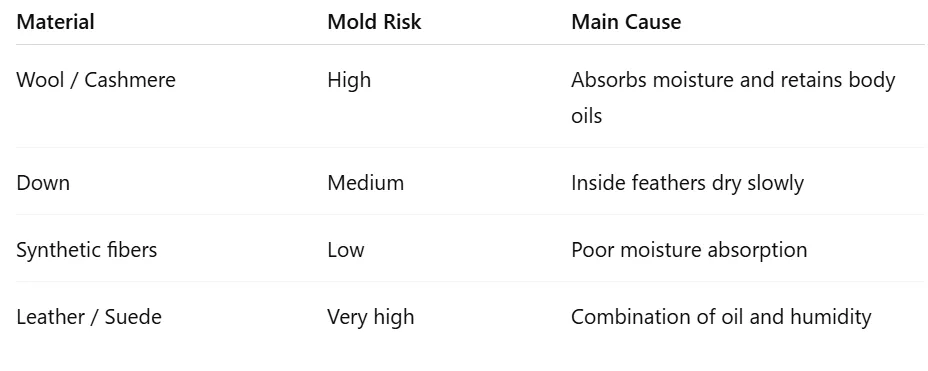
Winter clothing often contains natural fibers such as wool, cashmere, leather, and suede — all of which easily absorb moisture and provide nutrients for mold.
Even if clothes look clean, traces of sweat, sebum, and rainwater can become a perfect breeding ground for mold.
1.2. Humidity and Air Circulation in Storage Spaces
Even well-washed clothes can develop mold if the storage environment is humid or poorly ventilated.
When humidity exceeds 60%, mold spores can begin to grow. Plastic containers without airflow or closets placed near cold walls can easily trap moisture.
Tip: Use moisture absorbers or dehumidifier packs, and avoid placing storage boxes directly on the floor.
Preparation Is Key: Washing and Drying Tips
2.1. Removing Invisible Sweat and Oil Stains
2.2. How to Dry Clothes Thoroughly Before Storage
2.1. Removing Invisible Sweat and Oil Stains
Many winter garments appear clean but still contain body oils and sweat that feed mold.
Best practices include:
Have coats and sweaters professionally cleaned.
Handwash washable items using mild detergent, then towel dry.
Apply an anti-mold or anti-bacterial spray after drying.
Even a small amount of moisture or oil can trigger mold, so proper cleaning and complete drying are essential.
2.2. How to Dry Clothes Thoroughly Before Storage
Improper drying is one of the most common causes of mold.
Thick materials like wool and down tend to retain inner moisture, even if they feel dry outside.
Drying tips:
Dry in a shaded, well-ventilated area (avoid direct sunlight for delicate fibers).
After drying, let the items air out indoors for a day before storing.
For boots, place newspaper inside to absorb residual moisture.
Smart Storage Methods to Keep Mold Away
3.1. How to Use Mold and Moisture Absorbers Properly
3.2. Cleaning and Ventilating Your Closet
3.1. How to Use Mold and Moisture Absorbers Properly
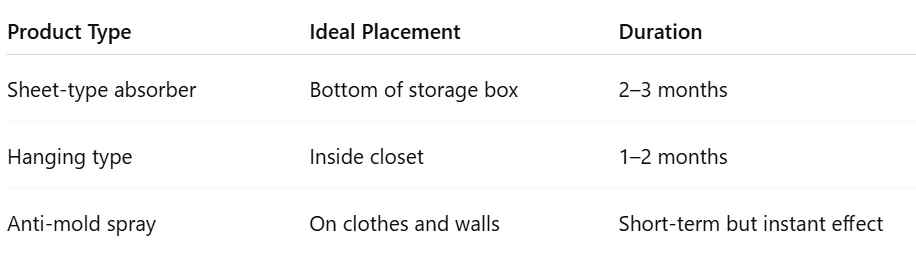
Mold and moisture control products work best when placed in the right position.
Since moisture accumulates at the bottom, place sheet-type dehumidifiers under stored clothes, and use hanging types inside closets.
3.2. Cleaning and Ventilating Your Closet
Before storing clothes, wipe the inside of your closet with alcohol spray or a mild cleaner to remove any existing mold.
Open the closet door once a week to let fresh air circulate.
Extra tips:
Wipe mold spots on walls using neutral detergent + alcohol.
Use a dehumidifier or air circulator in humid rooms.
Avoid overpacking your closet — allow airflow between garments.
----------------------------------------------------------------------
カビバスターズ沖縄
沖縄県国頭郡金武町伊芸1996-13
電話番号 : 080-3977-9591
----------------------------------------------------------------------
