
Essential Moisture and Condensation Control Methods for a Mold-Free Closet
2026/03/14

Why Japanese Closets (Oshiire) Are Prone to Mold
1.1. The Difference Between Closets and Oshiire
1.2. The Role of Floor and Wall Moisture
1.1. The Difference Between Closets and Oshiire
Traditional Japanese closets, known as oshiire, are more airtight than modern wardrobes.
Unlike Western-style closets, they often lack ventilation openings and are directly connected to the tatami or floor structure, which traps moisture.
When futons or clothes are tightly packed, air circulation stops, and condensation occurs even with slight temperature differences.
This moisture accumulation becomes a breeding ground for mold spores, especially black mold and white mold, which can damage not only stored items but also the wooden structure itself.
1.2. The Role of Floor and Wall Moisture
Moisture doesn’t just come from the air—it often rises from underfloor spaces or seeps through walls, particularly in older wooden houses.
When the relative humidity of the underfloor space is high, it affects the humidity inside the closet, especially during Japan’s rainy season or winter when temperature differences cause condensation.
📊 Humidity Fluctuation Table
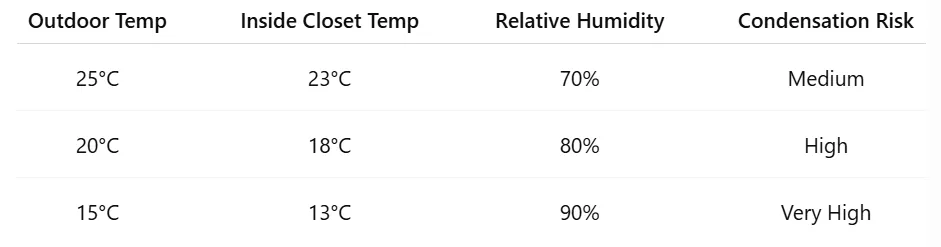
Once the humidity exceeds 80%, mold spores start to grow rapidly.
Northern or shaded rooms require special attention, as sunlight and airflow are limited.
How to Control Humidity Inside an Oshiire
2.1. Ideal Humidity Levels and How to Monitor Them
2.2. Practical Dehumidifying, Ventilation, and Insulation Methods
2.1. Ideal Humidity Levels and How to Monitor Them
The ideal humidity range inside a closet is 50–60%.
To maintain this, place a hygrometer (humidity meter) inside the oshiire and check the reading regularly.
📊 Humidity Reference Table
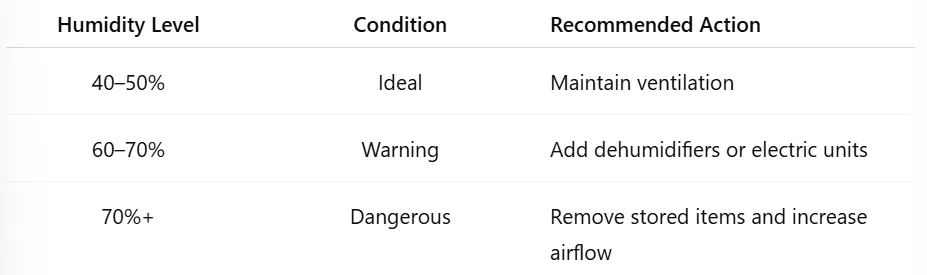
Using a digital humidity data logger can help visualize humidity changes throughout the day and identify the most problematic time periods or corners.
2.2. Practical Dehumidifying, Ventilation, and Insulation Methods
Dehumidification: Instead of relying solely on chemical packs, use a portable electric dehumidifier (cordless or rechargeable types are ideal).
Ventilation: Place wooden slats or bamboo mats under futons to create an air gap.
Insulation: For oshiire located along exterior walls, attach insulating sheets to prevent condensation.
💡 Pro Tip
Even in winter, opening the closet doors for just 15 minutes a day can lower humidity by over 10%.
Everyday Maintenance to Keep Mold Away
3.1. Storage Layout and Material Selection
3.2. Seasonal Humidity Control and Maintenance Habits
3.1. Storage Layout and Material Selection
Mold prevention starts with smart organization.
Use breathable storage materials, such as non-woven fabric cases or paulownia (kiri) wood boxes, instead of plastic containers that trap moisture.
Avoid overpacking—the ideal fill level is around 70%, allowing air to circulate freely around items.
3.2. Seasonal Humidity Control and Maintenance Habits
Rainy Season & Summer: Replace dehumidifying packs every two months; use a fan to circulate air.
Winter: Check insulation sheets and prevent condensation.
Spring & Autumn: Inspect for mold and wipe surfaces with alcohol or hypochlorous acid water.
📅 Seasonal Maintenance Table

✅ Conclusion
Mold in an oshiire is primarily caused by poor ventilation and trapped moisture.
By managing humidity and condensation through proper dehumidification, insulation, and airflow, you can keep your closet clean and odor-free throughout the year.
Continuous monitoring and seasonal maintenance are the most effective long-term solutions to ensure a healthy, mold-free living space.
----------------------------------------------------------------------
カビバスターズ沖縄
沖縄県国頭郡金武町伊芸1996-13
電話番号 : 080-3977-9591
----------------------------------------------------------------------