
A scientific look at humidity, ventilation, and materials — plus storage tips for leather shoes and sneakers, illustrated with visuals and tables.
2026/02/04

Understanding Why Shoe Cabinets Get Moldy
1.1. Humidity and Temperature Inside the Shoe Cabinet
1.2. The Role of Ventilation and Material in Mold Growth
1.1. Humidity and Temperature Inside the Shoe Cabinet
Shoe cabinets are often located in the entrance area, where temperature and humidity fluctuate sharply. This makes them ideal environments for mold, especially at 20–30°C and above 70% humidity.
During Japan’s rainy or humid seasons, residual sweat or rainwater from shoes increases the humidity inside the cabinet.
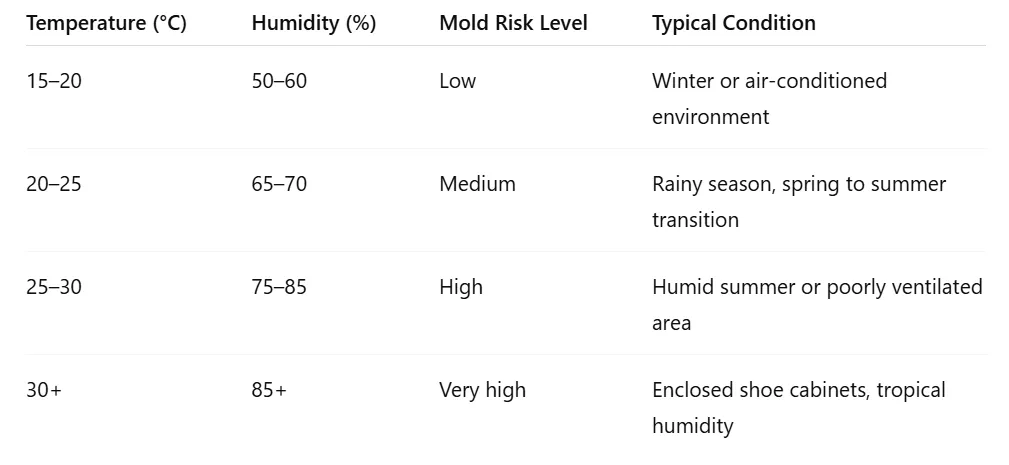
Mold spores can germinate in just 2–3 days under these conditions, particularly in closed cabinets.
1.2. The Role of Ventilation and Material in Mold Growth
The material of the cabinet matters. Plywood shoe cabinets lack moisture absorption and easily trap humidity, while solid wood or paulownia (kiri) naturally balances moisture through absorption and release.
Lack of ventilation holes further increases humidity, creating a breeding ground for mold, odor-causing bacteria, and microbes.
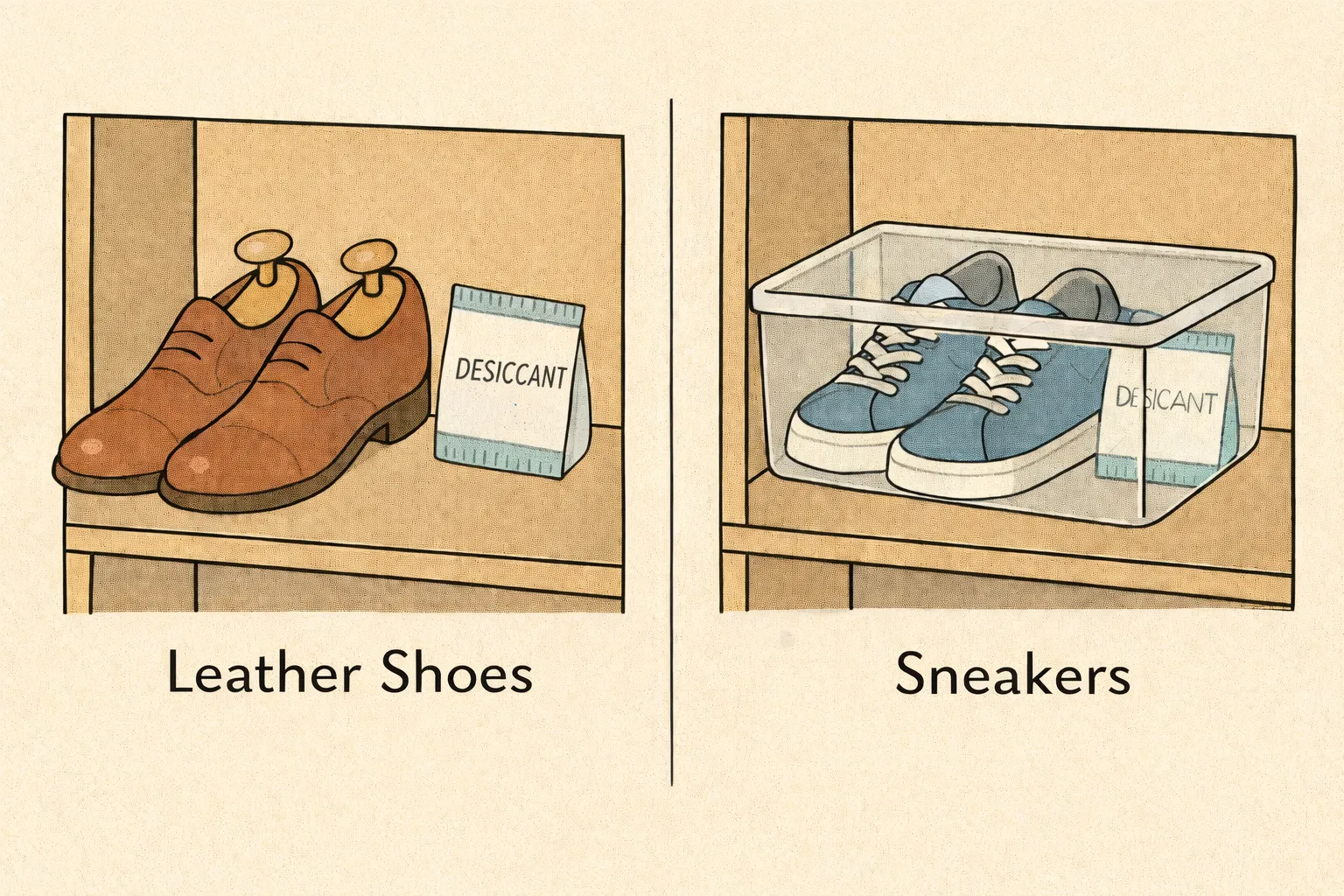
Smart Storage Methods by Shoe Type
2.1. Humidity Control for Leather Shoes
2.2. Keeping Sneakers and Fabric Shoes Clean and Mold-Free
2.1. Humidity Control for Leather Shoes
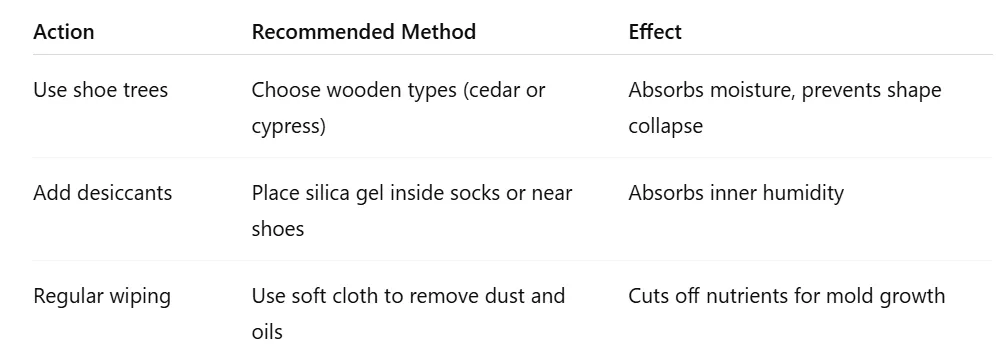
Leather shoes absorb moisture easily and are prone to mold growth. After wearing them, air-dry for at least half a day before returning to the cabinet.
Here’s a simple guide for keeping leather shoes mold-free:
2.2. Keeping Sneakers and Fabric Shoes Clean and Mold-Free
Sneakers have better ventilation but easily trap sweat and skin oils — perfect nutrients for mold.
Recommended care methods include:
Ensure complete drying after washing (including insoles)
Store in boxes with drying packets
Use alcohol disinfectant spray weekly for surface sterilization
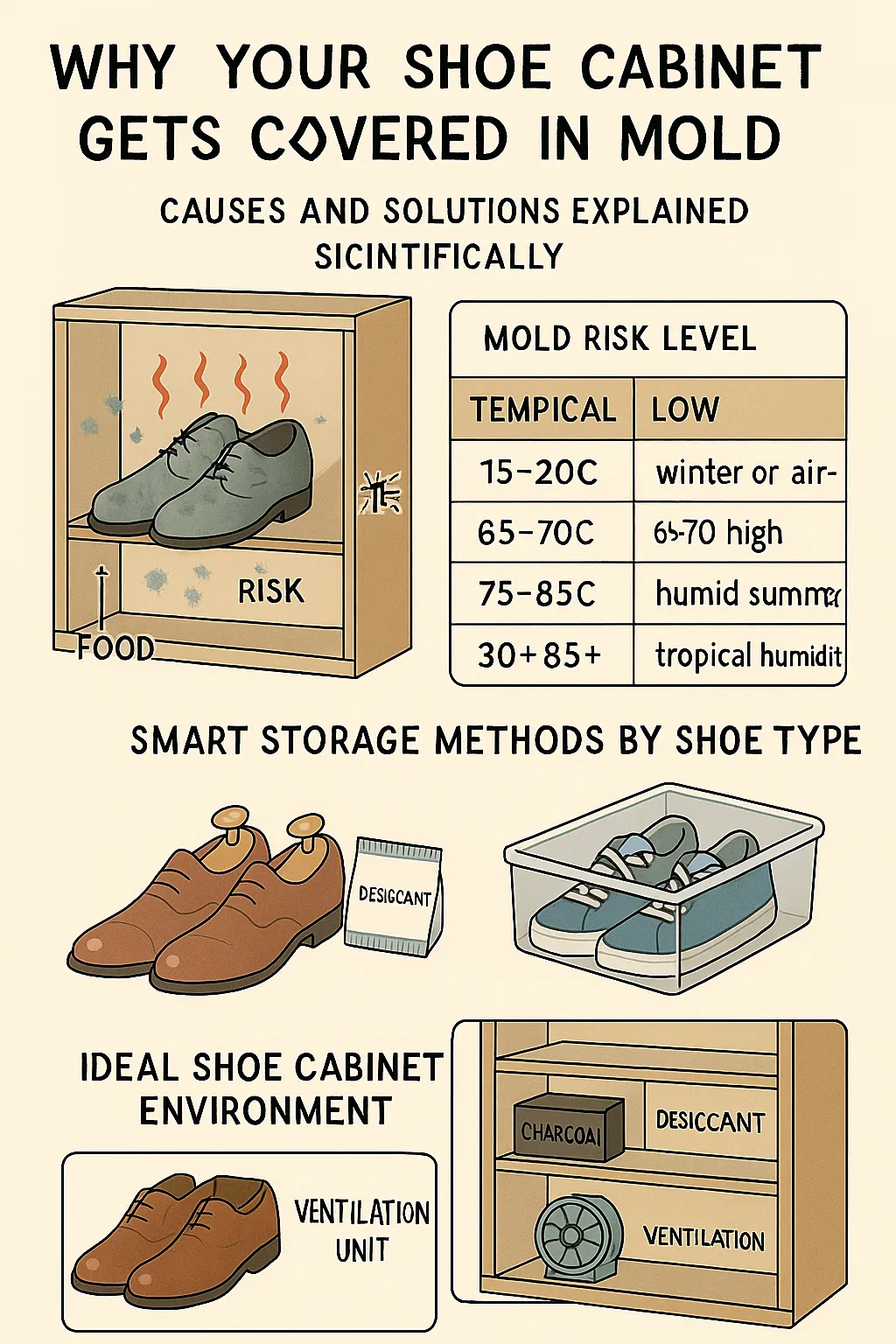
Practical Mold Prevention Techniques
3.1. Dehumidifying and Ventilating the Shoe Cabinet
3.2. Long-Term Mold Prevention Goods and Maintenance Habits
3.1. Dehumidifying and Ventilating the Shoe Cabinet
The most effective way to prevent mold is to keep air moving.
Follow these three essential steps:
Open the shoe cabinet doors for 10 minutes daily to allow ventilation.
Use a small USB fan or ventilation unit inside the cabinet.
Place a dehumidifier near the entrance to keep humidity below 60%.
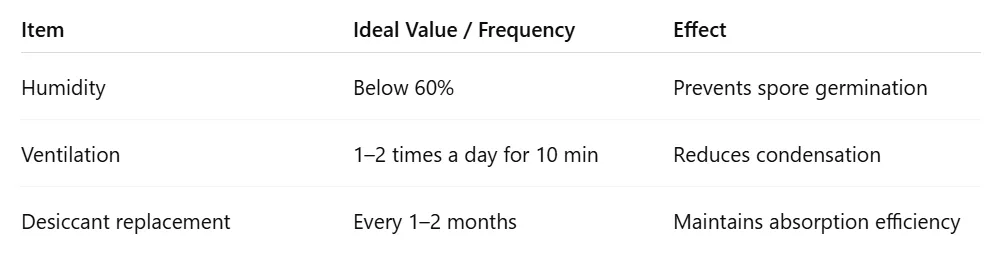
3.2. Long-Term Mold Prevention Goods and Maintenance Habits
To maintain a clean and odor-free shoe cabinet, practice these habits:
Line shelves with anti-mold sheets
Place bamboo charcoal or diatomaceous earth for natural dehumidification
Spray anti-mold deodorant once a week
Once a month, remove all shoes and fully air out the cabinet
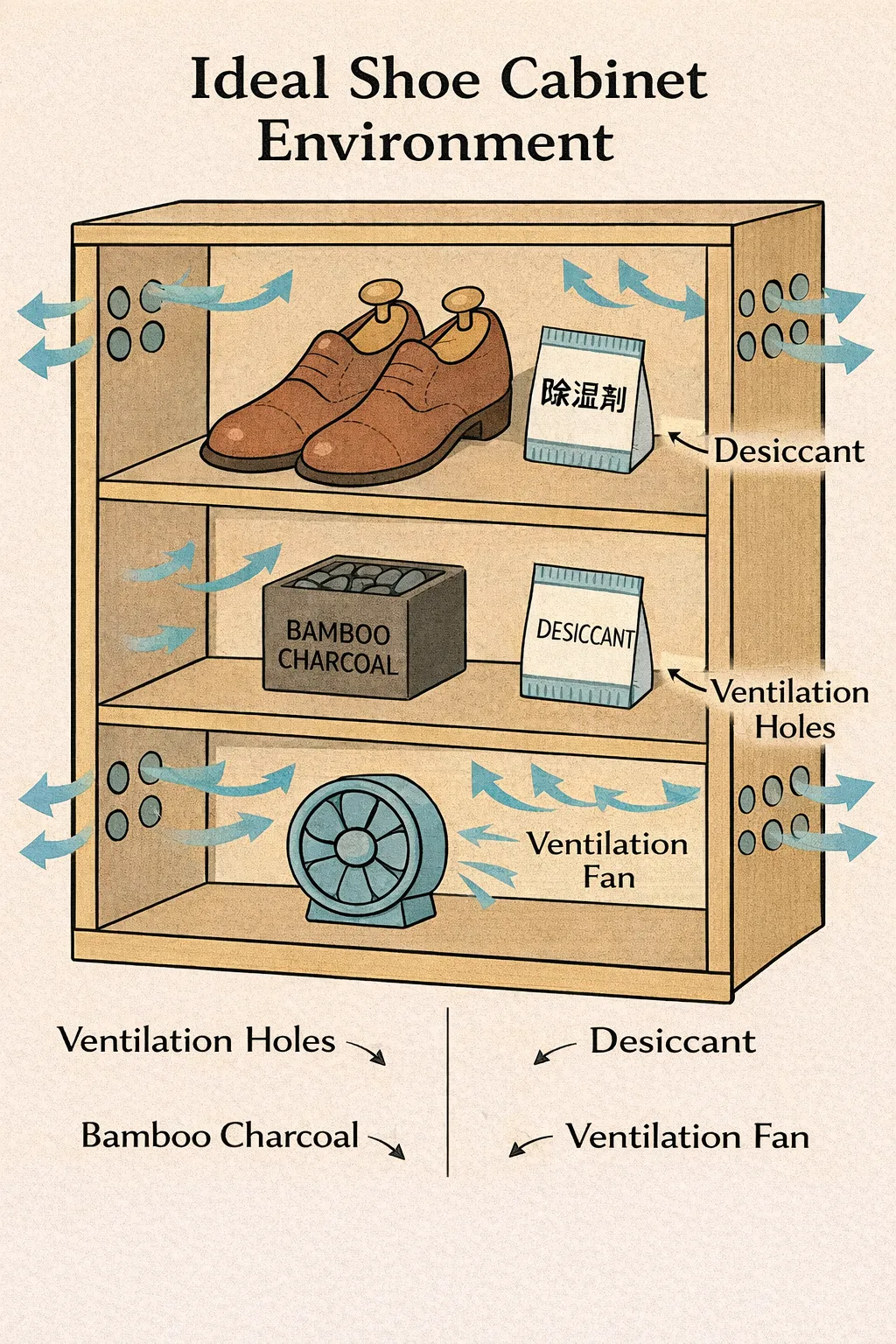
Conclusion
Mold in shoe cabinets develops when the balance of humidity, ventilation, material, and storage habits is disrupted.
By managing moisture scientifically and adapting storage methods to each shoe type, you can eliminate mold, odors, and deterioration from the root cause.
Let your shoe cabinet “breathe” and enjoy a fresh, healthy entrance every day.
----------------------------------------------------------------------
カビバスターズ沖縄
沖縄県国頭郡金武町伊芸1996-13
電話番号 : 080-3977-9591
----------------------------------------------------------------------